
Shopoff Realty Investments has an impressive 30-plus year track record of transforming underutilized, undervalued real estate. Today, they are continuing to buy distressed retail properties with the goal of redevelopment into residential, often with a bit of retail. This business strategy of returning properties to vibrancy is one way they are helping to address California’s housing shortage.
With four retail-to-housing projects currently in the works, President and CEO Bill Shopoff believes there’s significant runway for such redevelopments. He shared some insights about the challenges and the opportunities that arise from developments like these.
Can you talk about your firm’s track record of redeveloping retail properties?
We’ve redeveloped shopping centers historically as shopping centers. However, we’ve also been involved in several projects where we redevelop them for something else. We’ve even fully completed one in Fullerton, California. We bought a formerly grocery-anchored shopping center situated on about 10 acres. After going through the city we got the approval to build 113 homes for sale and while keeping a portion of the site for existing retail and about 10,0000 to 15,000 square feet of new-construction retail. We’re reimagining the location, adding new customers adjacent and keeping the hard corner that was functional where we had fast-food, coffee and other kinds of uses. We moved a veterinarian clinic that was in-line into a freestanding building, and then we successfully sold the hard retail corner. We’ve sold the residential development land to Lennar Homes, and we have a couple of pads left that are under contract and will be sold later this year.
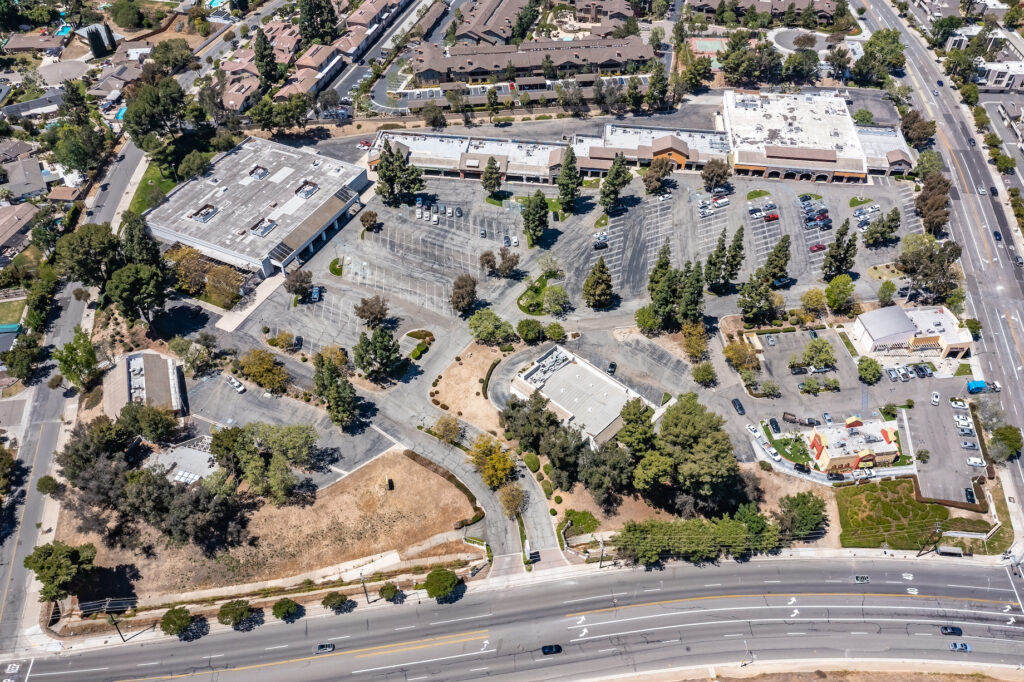
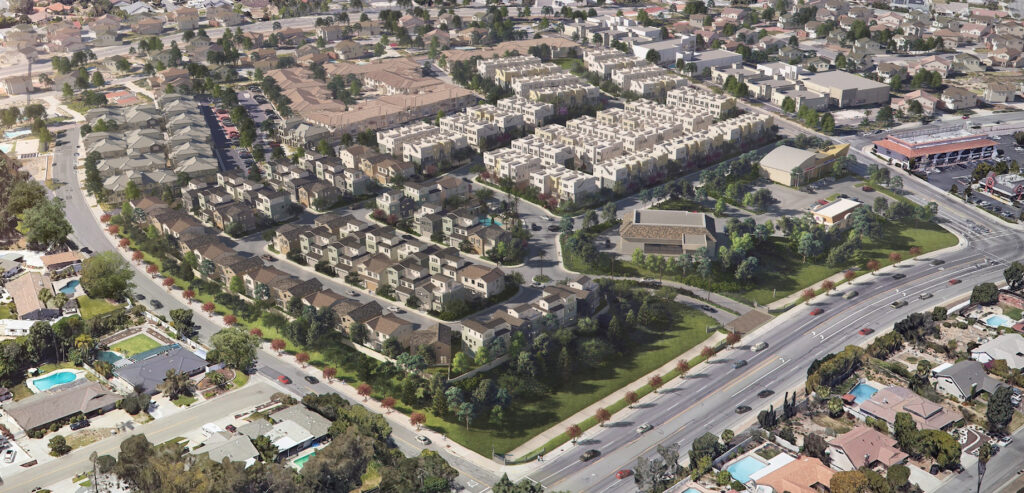
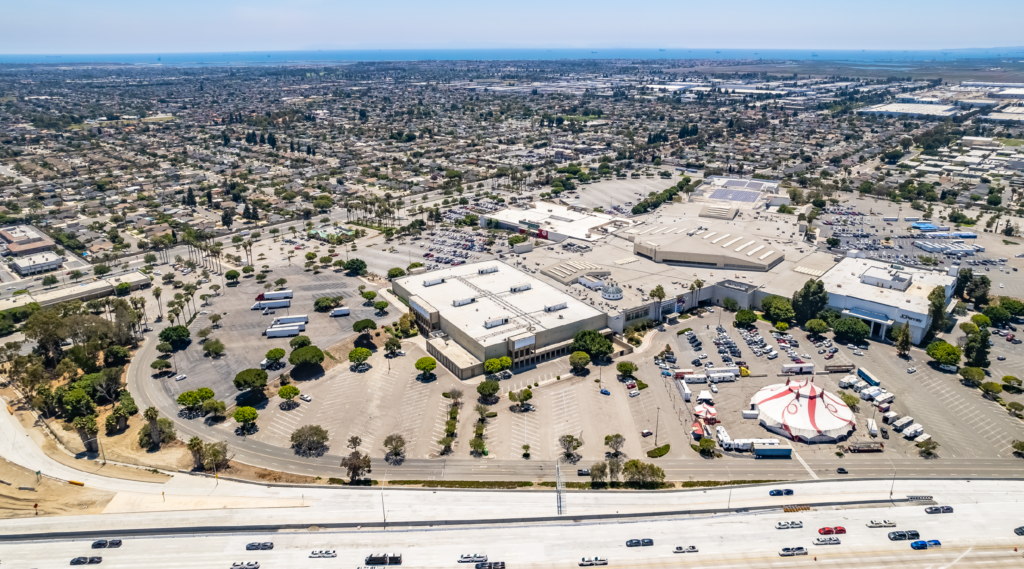
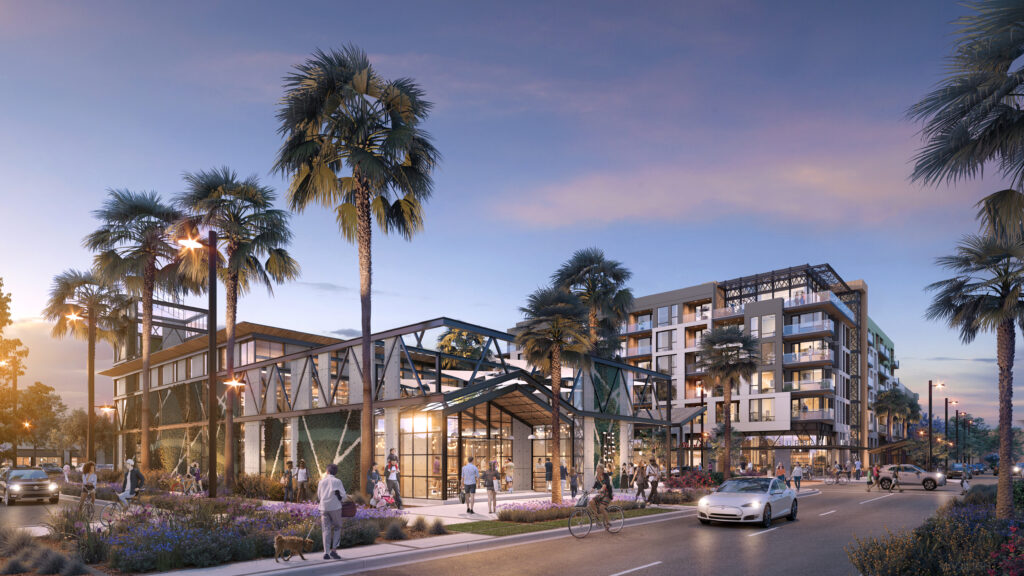
We have three others that we’re in process on. One of them, is a Sears and a Macy’s anchor store as part of the Westminster Mall in Orange County, California. We’ve gotten zoning approval for a combination of apartments and for-sale housing, also a bit of retail. After tearing down both stores, and we’ll add about 1,000 units of multifamily with a little over 100 units for-sale. We’ll also include about 25,000 square feet of food-focused retail – more experiential rather than focusing on things people could buy simply online.
So with those anchor stores, do you own the rest of the property, or do you have to work with the existing retail center owner there?
We’re working through the reciprocal easement agreements, the REAs, with the other owners. We’re in the process of negotiating those, and we’re confident something will be resolved on those. I’m not going to speak to specifics, but yes, we have to work through the cross easements and uses with other ownership. While that can be a pretty big obstacle, I think we’ve found some good strategies for that. The good news is that while we still need to finetune the execution, we’re all aligned in our thinking.
There is a lot of talk about stress from loan maturities ahead. What opportunities do you expect for buying retail properties to redevelop as residential?
Retail is weathering the storm better than people probably thought — certainly better than I thought — and there’s still an ample supply of new opportunities coming. Retail is still overbuilt or, as I like to say, it’s just under-demolished. I’d say the same thing about office stock. Good retail will thrive, bad retail is going to do poorly. To the extent that poor retail gets eliminated from the market supply, it’s going to raise the boats of good retail. So, I think there’s a win-win for the communities that support this work like this. The updated centers that remain become more vibrant, and the communities also get another more vibrant redevelopment adding to their tax base.
We’ve been talking about distressed retail for more than a decade, and we’ve seen a lot of stories about repurposing and redeveloping retail. On the flip side, retail vacancies are now pretty tight. Is the window of opportunity closing?
There’s still plenty of opportunity. In the last 60 days, we have seen that Macy’s is closing more stores and Outback Steakhouse is closing some restaurants. But there also are new stores opening. I think the shift in the market will still give us opportunity for us to solve problems.
Are you concentrating on California?
We’re mostly focused on Southern California, but we’ll go all over the state. For instance, we own a Nordstrom in Pleasanton, California. But we we’re not seeing the best opportunities for us yet, out of state. Land is maybe not as scarce, and the value proposition may not be there yet. We did look at a
JCPenney in Austin. I did think there was high value to it, so we’re not excluding it, but it’s not the primary target. There’s plenty to do in California.
Are you focusing on empty anchor boxes, or are you looking at other retail assets?
We’d love to do more of a neighborhood center where we could control the whole center. That could solve the REA issue. But it’s nearly impossible to find something that is completely vacant. The issue is dealing with existing tenancies as well as and dealing with relocation. And candidly, that’s a lot harder in retail than in the office world. People are mostly indifferent to where they go to the office, especially if a building isn’t thriving. Retailers think that where they are is often specific to their business, so you’ve got to price in incentivizing them at a greater level. That impacts what you can pay for something.
Any other current projects you can share?
We’re redeveloping in Santa Barbara a former Nordstrom store that’s a little bit different because I think we’ll turn the existing building into housing – adding either condominiums or apartments and maybe a little bit of retail. Most of the other examples I’ve talked about are demolition or partially repurposing.
How do you evaluate the feasibility of a redevelopment to residential? I imagine cost basis is a big part of it, but what else do you really need to make these projects work?
It certainly helps to have a city where you’ve got a pathway forward to success. That’s a pretty big piece of it. Also, the state of California has helped with zoning changes that because there are some rules and new laws that we can use to enhance my entitlement processing. For example, California has a bill called AB 2011. If I have a major roadway retitling as part of redeveloping a retail center, I can take that through using AB 2011 and I have a very direct pathway that the cities really can’t object to. That’s one of the tools that we’re using today. Also, in our Pleasanton project, before we closed, the city redid their housing element and put zoning on the center and provided a certain density that we could allocate amongst the owners.
Are there any other must-haves for these retail-to-residential redevelopments to work?
Obviously, you want a good physical site that will work – looking at utilities and ingress and egress, but generally traffic from the residential project is going to be almost certainly less than the historical traffic of a successful retail center. But of course, we check all those boxes before we acquire something. We do a lot of pre-acquisition due diligence.
What are the biggest obstacles to making these projects work? Is it cost? Is it not having a pathway with a city? Other issues?
There’s a reason why people aren’t getting this done as frequently as they would like to. It’s difficult, and very nuanced. Not only are you dealing with tenancy, but also easement agreements. Then you’ve got to deal with city governments. By themselves, each one of those is challenging, put them all together, it’s a lot of work – often too much for some people. It depends very much on your entry point. That’s going to decide whether you’re successful or not. I’ve heard it said that you make your money on the buy, and I agree. That’s a big part of it. If you don’t buy it right, it’s really hard to fix the problem.