
Vacancy Isn’t a Bad Word Now That Lease-Up Means Higher Rent and Diverse Tenant Mixes
Marketplace growth in 2023 was powered by continued consumer strength and strategic vacancy management. Today, market fundamentals still remain positive, so marketplaces look to be well positioned for the year ahead.
U.S. marketplaces defied recessionary predictions in 2023. Robust consumer spending and a healthy job market were two powerful forces behind that strength. Retail and food services sales climbed, particularly during the holiday season. All this positive movement manifested itself into rising base rents, which climbed 6.2% year over year to $21.15 per square foot, according to the ICSC Marketplaces Industry Report: Q4-2023. This is a significant 3.8% increase over 2019 base rents.
Landlords made the most of this market by converting vacant big-boxes into higher-paying uses and renegotiating with existing tenants to higher rents. One powerful example of this trend is Phillips Edison & Co., with a staggering 25.2% increase in comparable-rent spreads for new leases and a 17.9% increase across all leases, both new and renewed, in 2023. Notably during Q4, the company boosted renewal rents for inline tenants by 17%, highlighting strong demand for smaller, service-oriented spaces.
While the South and West lead base rent growth due to their growing populations and limited new development, this trend was is truly nationwide. That said, the growth in percentage rent, which is tied to tenant sales, moderated. While percentage rent did climb 1.6% in 2023, this growth was slower than the double-digit growth of the previous two years. There could be a number of reasons for this. Including a decline in new percentage rent leases, as evidenced by mall owner Macerich’s conversion of pandemic-era variable-rent agreements to fixed-rent ones.
Despite shopping center expenses going up 9.3% in 2023, net operating income continued its impressive growth, rising 4.5%. An example of this is Brixmor’s 4% increase in NOI during the Q4 even while dealing with store closings. The company strategically backfilled vacated spaces and secured a remarkable 60% rent growth on these re-leased spots.
By the end of 2023, U.S. shopping center occupancy reached 92%, a 2.3-percentage-point improvement since the pandemic low. Tanger, for example, maintained a high occupancy of 97.3% and filled vacancies by focusing on popular growth categories like home decor and health-and-wellness. This tenant diversification certainly positions Tanger for future sales growth.
Check out the full ICSC Marketplaces Industry Report: Q4-2023.
Planned Macy’s Closures Impact $24 Billion in CMBS Loans, but It’s Not the Apocalypse
The fact that Macy’s Inc. plans to close 150 stores is certainly noteworthy. Especially when 80 of those locations are stores that anchor malls that serve as collateral for $24 billion of commercial mortgage-backed securities, according to data from CoStar and Morningstar DBRS. Notably, $3.6 billion of this debt is already undergoing special servicing, indicating potential trouble. C+CT reported on Macy’s Inc.’s plans last week.
The nervous view: Retail CMBS remains stable compared with CMBS sectors like office and lodging, but the closures of Macy’s stores could exacerbate existing vulnerabilities, impacting cash flow at these properties and triggering defaults or missed payments. According to the Mortgage Bankers Association, delinquencies on retail CMBS loans remain elevated compared to pre-pandemic levels and significantly higher than multifamily and industrial CMBS sectors.
However, recent sentiment has been that landlords are happy to reclaim large spaces and thus gain control over their properties’ futures. Axios reported that despite the CMBS exposure to the Macy’s store closures, mall owners simply aren’t worried. And there is demand. Last month, C+CT reported on Dick’s Sporting Goods’ House of Sport concept and its plan to backfill mall anchors. Marcus & Millichap vice president Trever Gallina’s LinkedIn comment said a lot. He wrote: “I’d never thought I’d say this, but ‘good luck finding space.’”
2024 Store Plans for Whole Foods, Best Buy, Ross Stores, Nordstrom Rack and Target
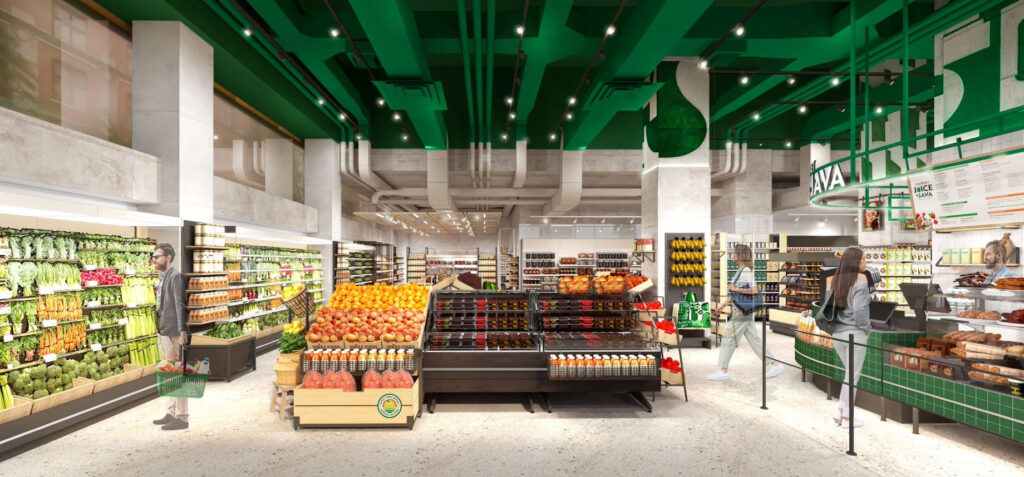
Whole Foods Market is working hard to reach dense urban areas with a smaller store format called Whole Foods Market Daily Shop. Offering quick in-and-out, grab-and-go meals in relatively small 7,000 to 14,000 square feet quick-shop stores. They’ll also feature essential groceries and prepared foods, complementing existing larger stores. The concept launches on Manhattan’s Upper East Side this year.
Nordstrom will continue opening Nordstrom Rack off-price stores this year. Last year, it opened 19 Rack stores with plans to open 22 more in 2024. Rack net sales were flat from 2022 to 2023, while sales across traditional Nordstrom stores declined 8.2%.
Ross Stores is also taking a cautious approach to expansion of its DD’s Discounts chain. Following less-than-ideal results in 2024, Ross Stores CEO Barbara Rentler has announced a shift in focus toward existing markets while the company conducts additional research. This strategic change comes after a year of significant growth. In 2023, Ross Stores added a net total of 94 stores, bringing its portfolio to 2,109, including 345 DD’s Discounts. To add to those numbers, the company plans to open 75 Ross Dress for Less locations and 15 DD’s Discounts in 2024.
Best Buy expects consumers to buy more tech products this year. By expanding into categories like wellness technology, personal electric transportation, outdoor living and even electric car charging in 2024, the company is certainly evolving. It also is transforming its physical stores to align with in-store pickup of online orders. According to CEO Corie Barry, 40% of Best Buy’s online orders, are picked up in store. The company is addressing that shift by replacing product displays with dedicated space for processing and fulfilling online orders. In addition, Best Buy plans to close 20 to 30 large-format stores and invest $200 million in renovations of other stores. This includes remodeling eight large experiential stores and two midsize locations. Best Buy also will open around 10 outlet stores focused on discounted merchandise. It will continue to monitor a small-format concept focusing on tech tools that it launched last year.
Target has plans to build more than 300 stores over the next 10 years, while also renovating most of its nearly 2,000 stores. Some will be full remodels, some will add Ulta Beauty stores-within-stores, some changes will be smaller like upgrading fixtures. Others will adapt to better support same-day pickup of online orders. Target’s 2024 is also leaning into artificial intelligence and sorting centers to make next-day delivery faster and more efficient.
Web Traffic Results After CBL Put Mall Retailers’ Inventory Online
Three weeks ago, C+CT reported CBL Adds Tenants’ Inventory on Two Malls’ Websites, and now CBL has early results on that endeavor, which displays in one spot on a mall’s website the inventory in stock throughout the mall. The week after Inventory Insider launched, traffic on both Tennessee properties’ websites surpassed December 2023 traffic, including the week before Christmas. Moreover, data suggests shoppers are returning to use the online platform, according to the company. Return visits to CBL’s website set a record for the month of February and exceeded December 2023.